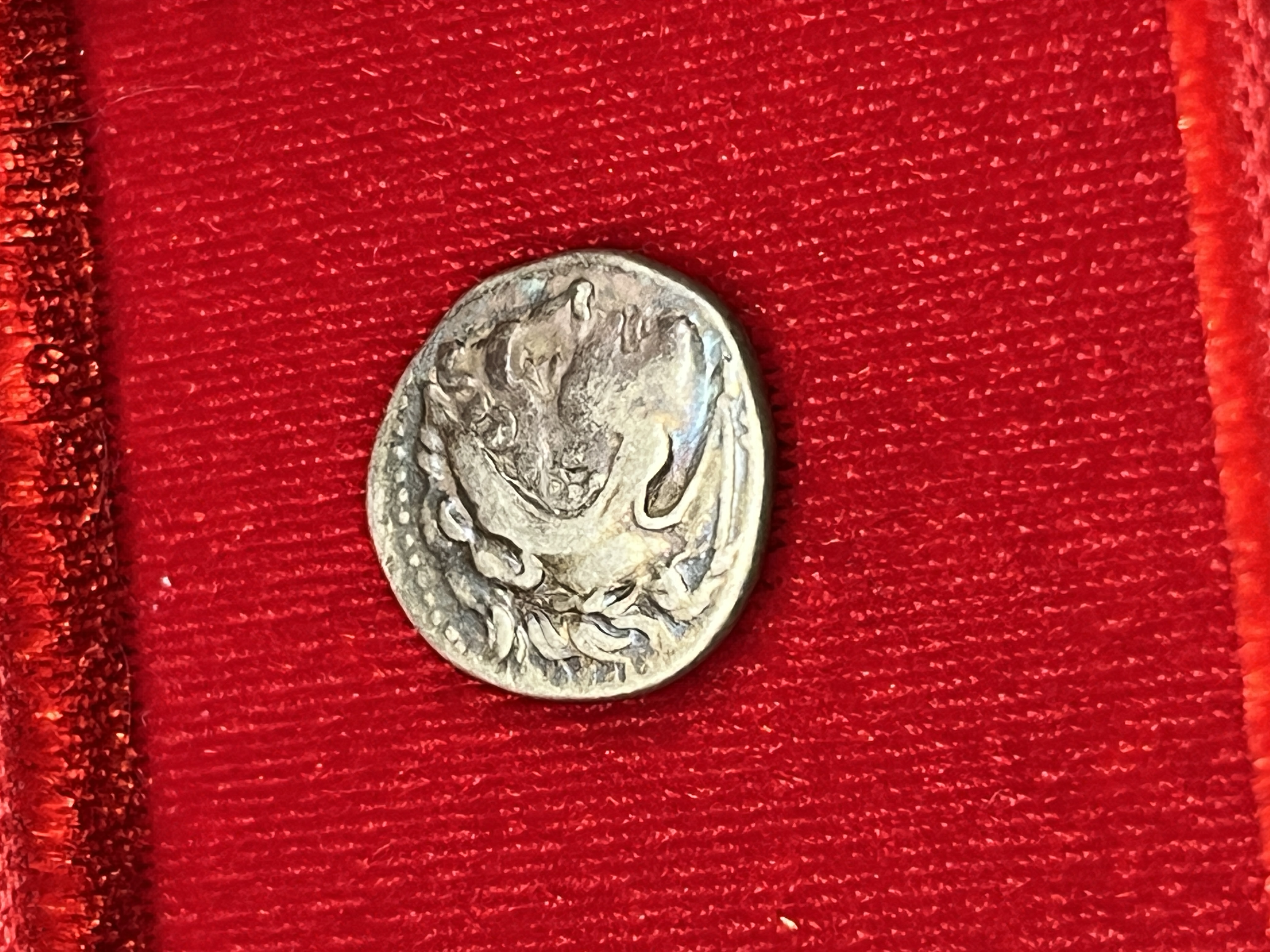
Greek Drachma with Head of Alexander the Great (Lifetime Issue)
A classic. This lifetime issue (minted while the depicted ruler was still alive - 336-323 BCE were Alexander's ruling years) drachma features the head of Herakles wearing the Nemean lion skin, a common motif used by Alexander to link his lineage to the divine. On the reverse, Zeus is depicted enthroned, holding an eagle and a scepter.
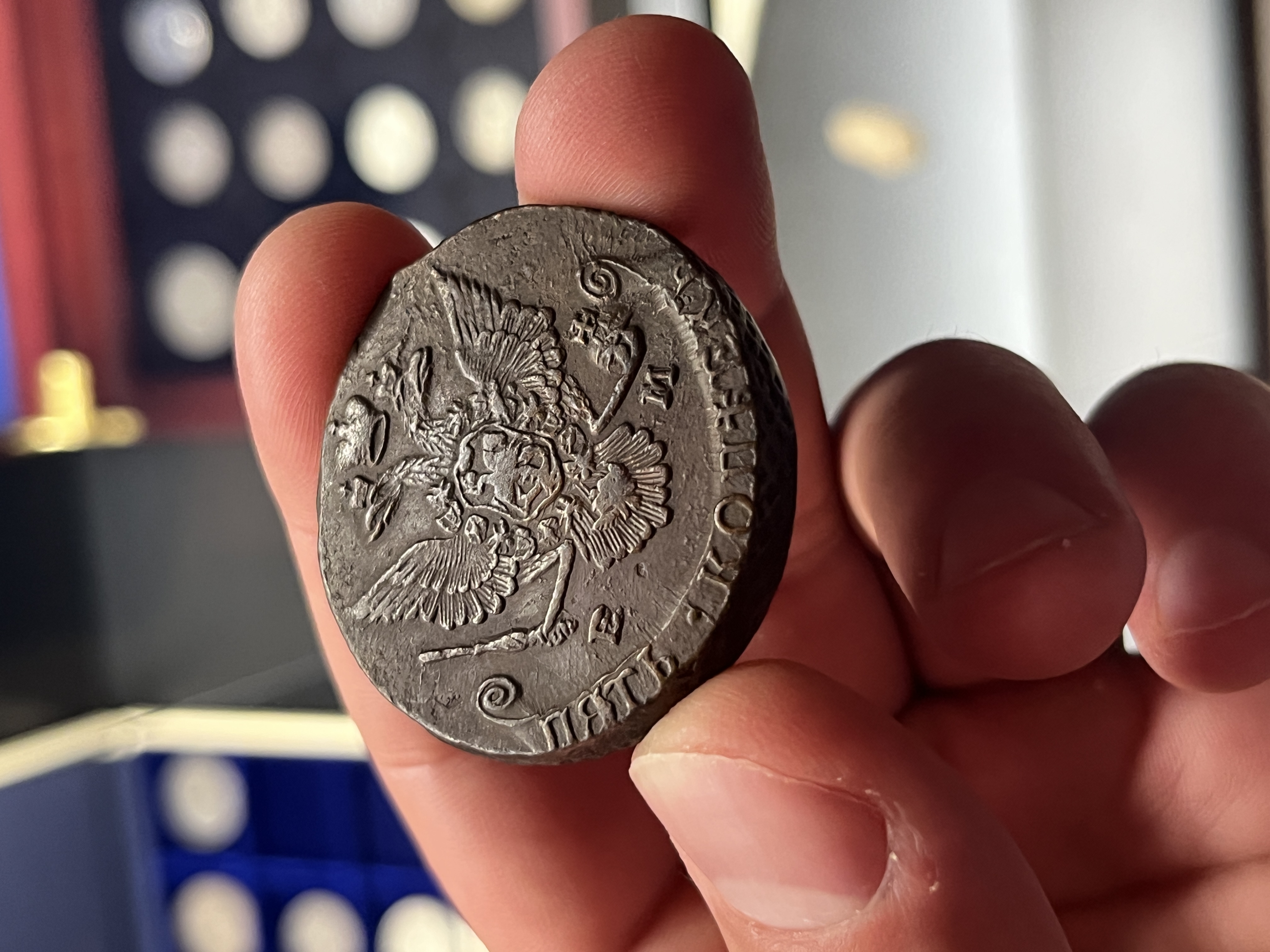
Russian 5 Kopek "Chonker" (Catherine the Great)
Minted at the Ekaterinburg mint (you can tell from the "E M" flanking the eagle), these massive copper coins weigh upwards of 50 grams. This one is nearly 70 grams. They were struck during the reign of Catherine the Great and feature the Imperial Monogram on the obverse and the Romanov Eagle on the reverse.
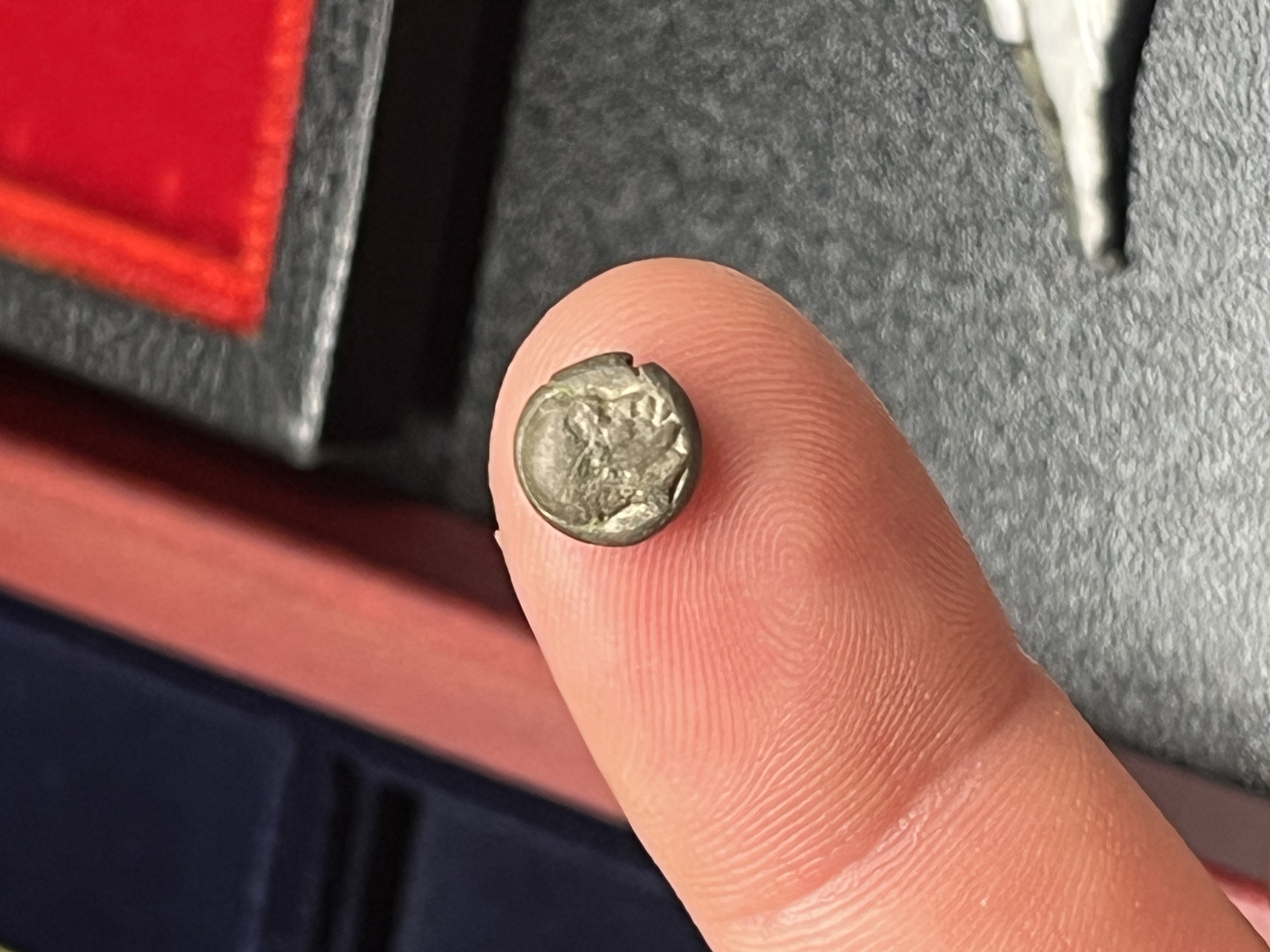
Fractional stater from the ancient Greek island Lesbos approx. 500 BCE
This tiny coin is called a fractional stater (the larger coins, "staters" - meaning city-state coinage -, often had denominations like 1/2, 1/3, 1/6, 1/12, and even 1/24 and 1/48! This particular 1/12th stater was minted on the island of Lesbos, which is famous as the birthplace of the ancient Greek poet Sappho. This was made from billon, a silver/copper alloy containing less than 50% silver.
This coin shows the head of a young African male facing right. What story does this tell us? Here is a relevant quote: "We know that the Greeks were well acquainted with black Africans, since they appear often in Greek literature as mythical or semi-mythical characters and warriors; it appears that they were known in the Greek world as early as the Minoan period, where they were employed by Minoan commanders as auxiliary troops. Indeed, if we may believe Quintus of Smyrna, the Greeks encountered black Africans in the army of Memnon at Troy. Black African contingents also formed a part of Xerxes' army and according to some scholars fought at Marathon (see Frazer, J. G., 1913: Pausanias' Description of Greece, II. Macmillan, London, pg. 434; and Graindor, P., 1908: Les Vases au Nègre. Musée Belge, pg. 29)." He is not here for any derogatory reason: the ancient Greeks made judgements based, at least partially, on one's ability to speak the language. Such dark complexioned people were known as Aethiopes, (from Aethiop, who was, according to Pliny, a son of Vulcan/Hephaestus) and are first mentioned by Homer; they were familiar to Greeks (and Romans) who travelled on the Nile into Nubia. This is an excellent example of how a coin can be densely filled with information. The opposite side of this coin displays an incude square pattern - imagine a 2x2 grid where squares get deeper as you travel clockwise. The test cut Aspendos stater might give you a hint for the purpose of this - it is an anti-forgery technique - one of the earliest known, at that. This incuse pattern makes plated forgeries harder to make because they required striking rather than casting to create.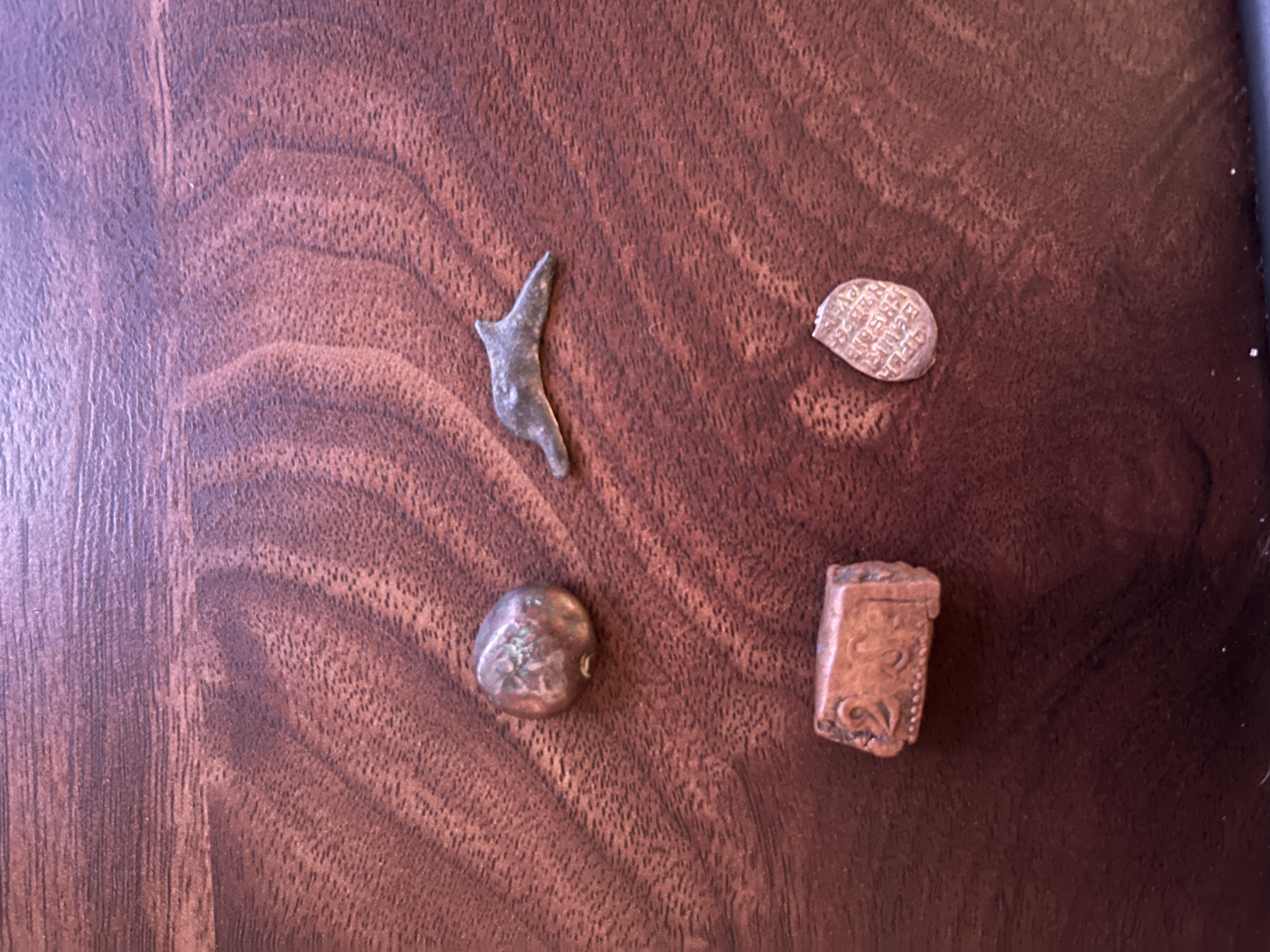
Interesting Coin-adjacents
These are examples of some of my favorite "coin-adjacent" pieces in my collection. Starting from the top left, going clockwise:
Japanese bean money (Mameita-gin) - these are small, irregularly shaped silver coins used in Japan primarily during the Edo period (1603–1868) for everyday transactions. They were essentially traded as bullion. Scythian dolphin money - This 5th-century BCE bronze proto-money was used for trade between Greek colonists and Scythian tribes. This was produced in Olbia, in modern-day Ukraine. Olbia lies on the Black Sea, where you can find the Black Sea bottlenose dolphin. Russian Wire Money minted under Ivan IV "The Terrible" - "Wire money" was minted by hammering cut lengths of a rolled silver wire. You can see where the wire was cut at 12 o'clock and 7 o'clock on the face of the coin. Dutch East Indies 2 Stuivers "Bonk" - This was minted in the late 1700s or early 1800s. In the Dutch East Indies, currency was brought in via ships from the Netherlands. In 1792, the French Revolutionary Wars began, which then carried into the Napoleonic Wars until 1815. The Dutch ships that would normally carry over currency were a little preoccupied, so copper lengths from Japan were imported and cut into crude blocks in Java to be used as emergency money. The "2S" means this was worth two stuivers. This particular example is from 1810.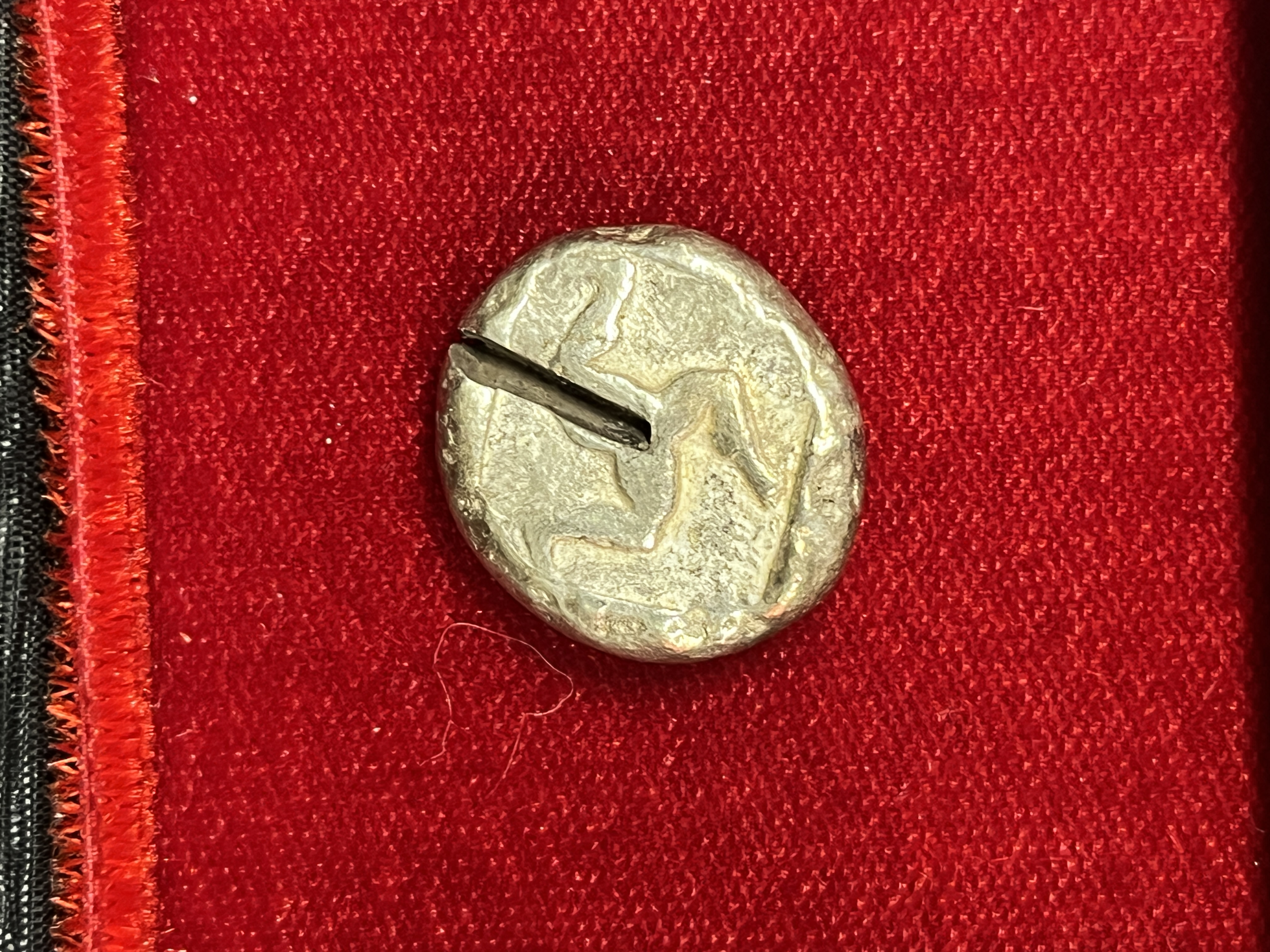
Greek Aspendos Stater with Test Cut, approx. 350 BCE
Aspendos is an ancient Greco-Roman city in modern-day Turkey, famous for its theatre constructed during the reign of Marcus Aurelius by the architect Zenon. The Triskeles (meaning "three legs") was the city emblem whose meaning is unclear today. The opposite side of this coin depicts a hoplite with spear and shield advancing.
The most interesting part of this coin is the "test cut", where somebody tried to use this coin and a scrupulous merchant cut into the coin to ensure it was silver all the way through and not a plated forgery (which have been around as long as coins themselves).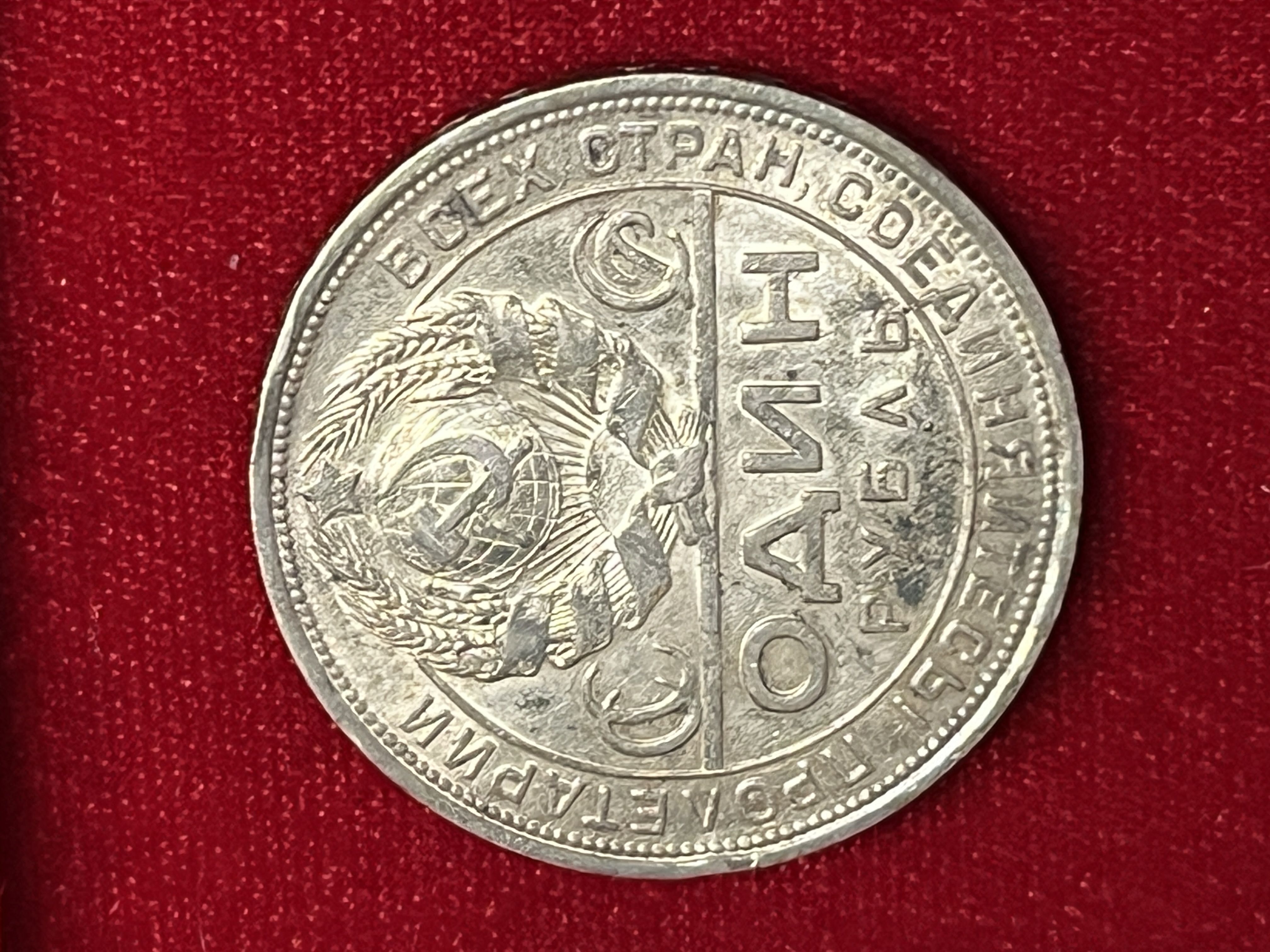
1924 Silver Rouble: The Early Soviet Transition
This silver rouble was minted during a transition period of early Soviet history, following the Civil War and the formal establishment of the USSR. The obverse displays the state emblem—the hammer and sickle over a globe, while the reverse depicts a worker and a peasant, symbolizing the "Smychka" (the union of classes). This issue represents one of the final instances of the Soviet state using precious metals for circulating currency before moving to base metals.
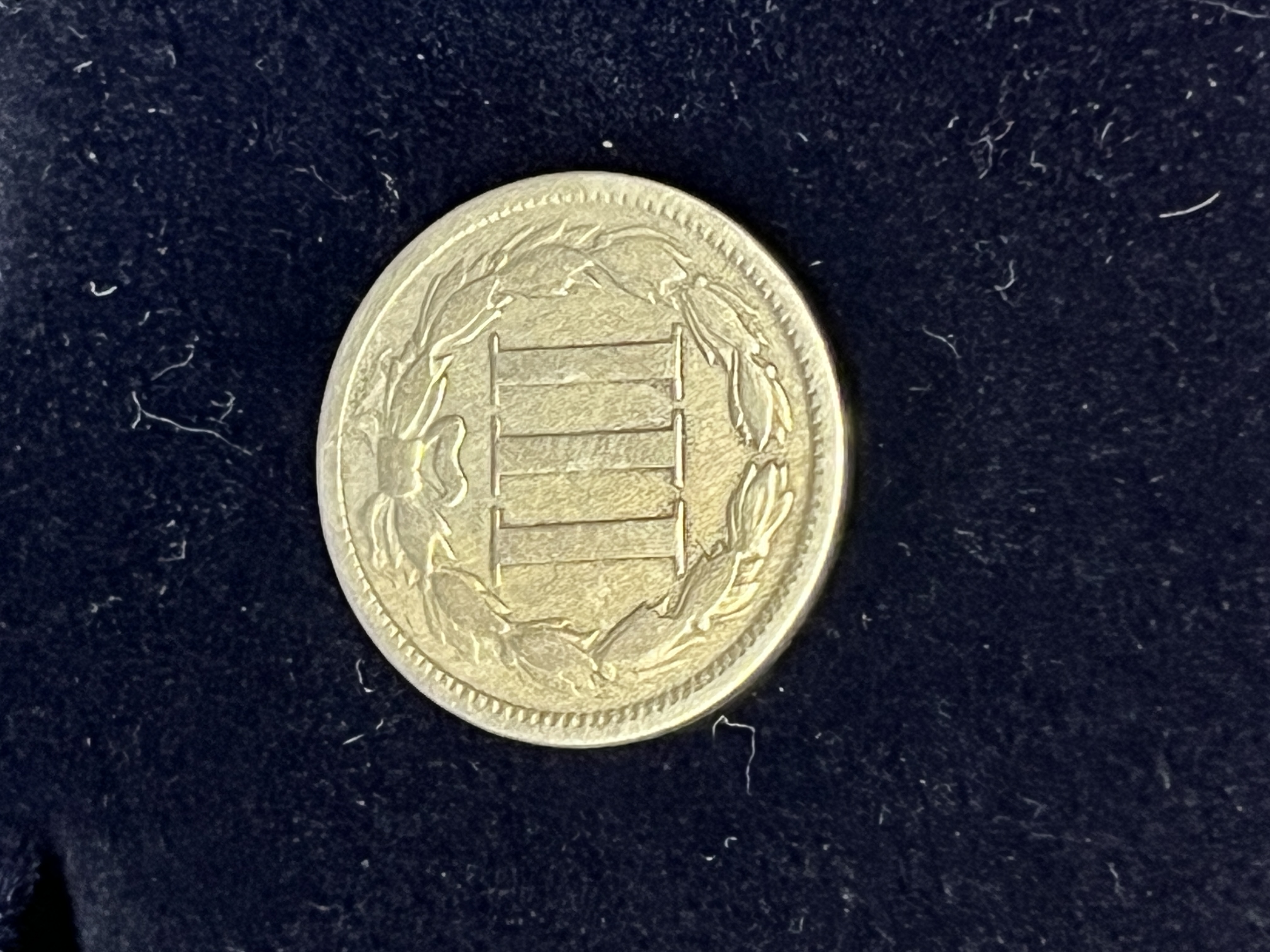
US "Trime" (Three-Cent Silver), mid-1800s
Did you know the US has made a three-cent piece (and two cent, and half cent..)? The silver three-cent piece, or "Trime," remains the smallest and lightest coin ever minted by the United States. Introduced in 1851 to facilitate the purchase of three-cent postage stamps during silver hoarding periods, its 14mm diameter made it notoriously easy to lose. It stands as an impractical but historically significant solution to mid-19th-century currency shortages.
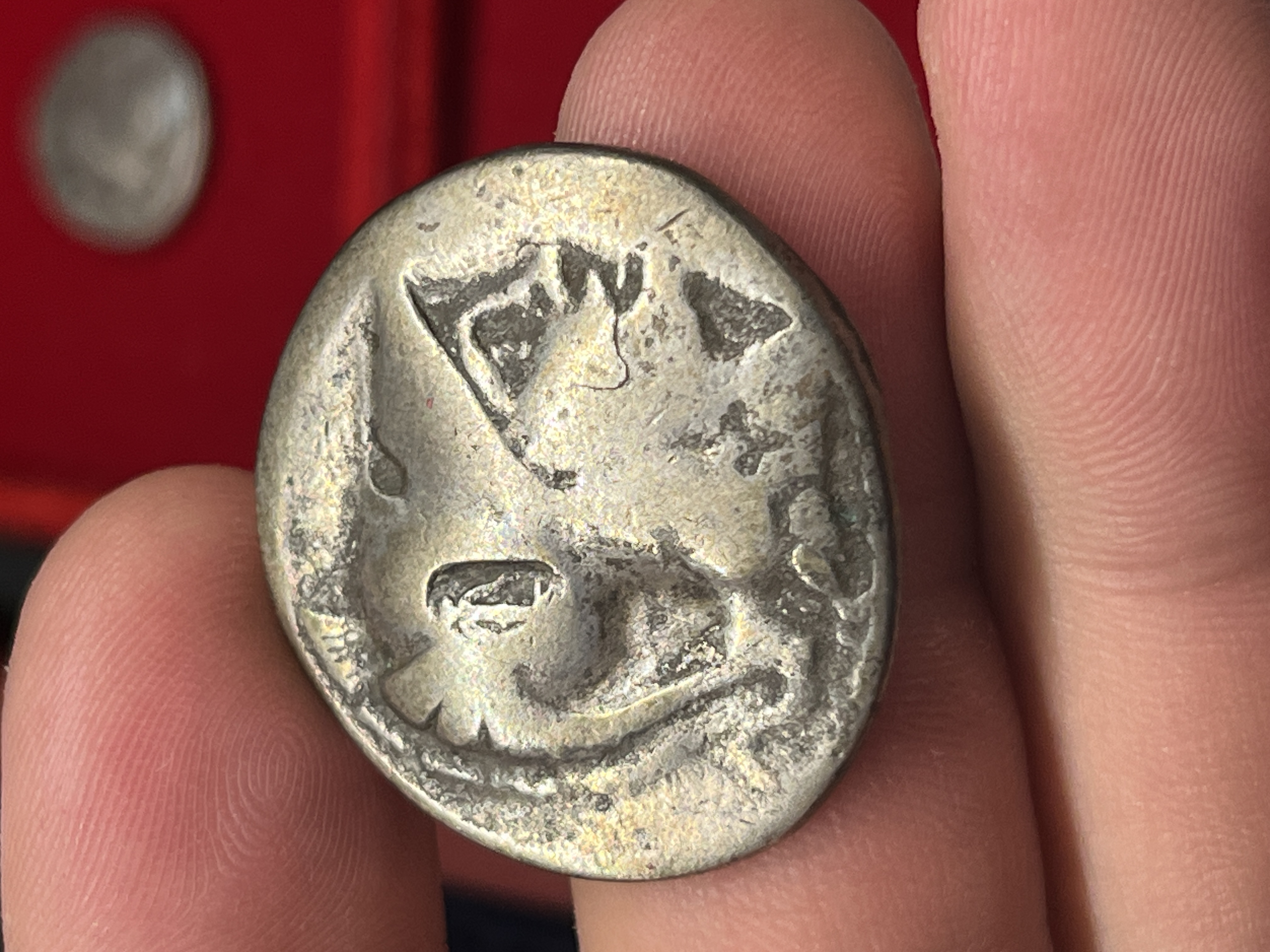
Greek Tetradrachm from Side: Athena & Nike
Minted in the maritime hub of Side, this Hellenistic tetradrachm features the helmeted head of Athena on the obverse and Nike, the personification of Victory, on the reverse. These coins were prominent in regional commerce and often bore a pomegranate - the city’s namesake - as a symbol of local Sidetan identity (local tranlation of "Side" (pronounced "see-day") is literally "pomegranate"). The pomegranate was an ancient Greek symbol for fertility, abundance, and the cycle of life and death.
This coin also has one of my favorite features in my entire collection. On Athena's helmet (she is wearing a Corinthian-style helmet, upturned and resting on her head) there is an oval stamp with an anchor on the inside. This tells us that this coin (and probably thousands of others just like it) travelled to the Seleucid Empire, which spanned as far east as the borders of modern-day India. The Seleucid authorities often did not recognize the "face value" or authority of foreign city-state coinage. To validate the silver (purity) for use within their own borders - likely for military payroll - they struck it with the dynastic anchor, the personal seal of Seleucus I Nicator. Legend holds Seleucus was born with an anchor birthmark inherited from his supposed father, Apollo. This coin is very worn and likely passed through many, many hands across thousands of miles for centuries.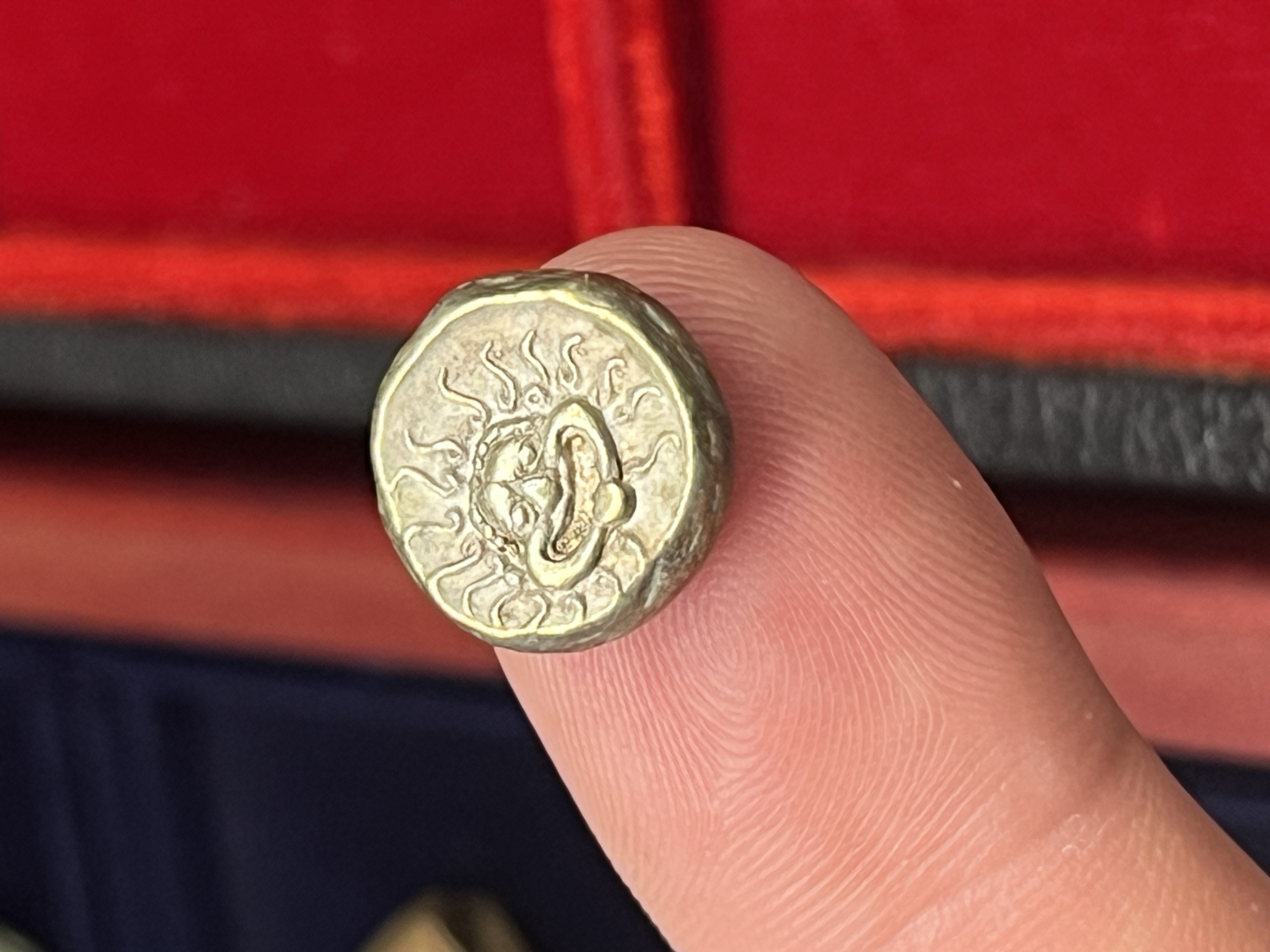
Gorgon Drachm from Apollonia Pontica, approx. 400 BCE
This coin features the Gorgoneion - the face of a Gorgon with a protruding tongue - intended as a symbol to ward off evil. The reverse depicts an anchor and a crayfish, reflecting the maritime importance of Apollonia Pontica on the Black Sea coast, where trade was the primary economic driver. As you can see here, the early depictions of Medusa were much less humanized.
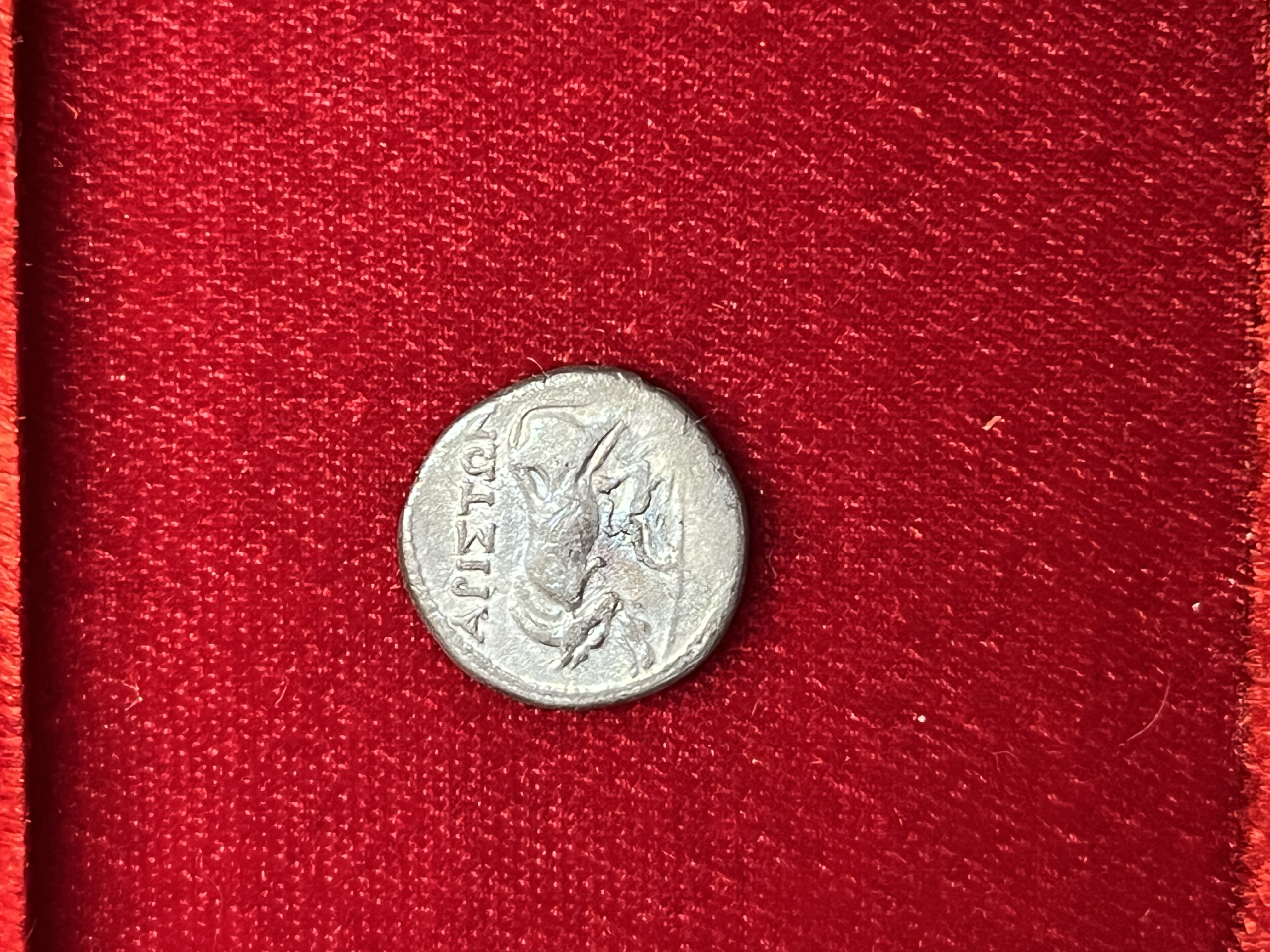
Illyrian Drachm Depicting Calf Suckling
While most Greek coinage focused on gods and monsters, this drachm from Apollonia in Illyria (modern-day Albania) showcases a tender scene. The obverse features a cow standing to the left, looking back to lick a calf suckling at her udder. This was the standardized "type" for the region and serves as a direct reference to the agricultural wealth and livestock fertility of the Adriatic coast. I appreciate that this one makes me think about human values, life, and how some things (like how this scene is perceived) have not changed for all of recorded history.
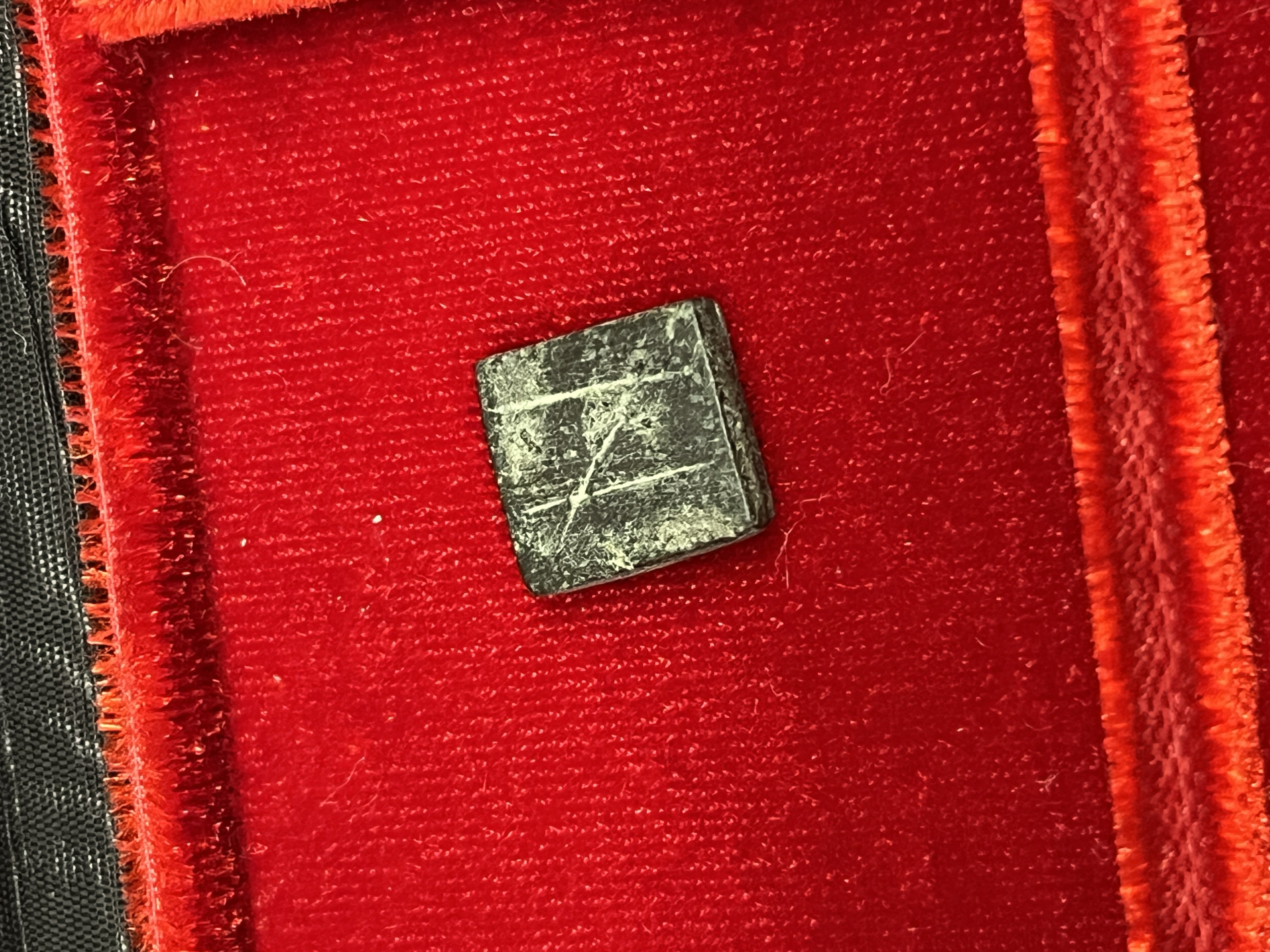
Byzantine Nomisma (Standard Weight for Gold Solidus)
This is not a coin, but a Nomisma - a commercial weight used by the Byzantine Empire to verify the integrity of the gold Solidus. The Solidus was the international standard of trade for centuries, and its value was tied strictly to its weight (approx. 4.5g).
These weights were essential tools for merchants and tax collectors to detect "clipping" - the practice of shaving small amounts of gold from a coin's edge. At this point in time, the reeded edge of coins had not been invented (thank you, Sir Isaac Newton!) so weight-based countermeasures were the next best option.
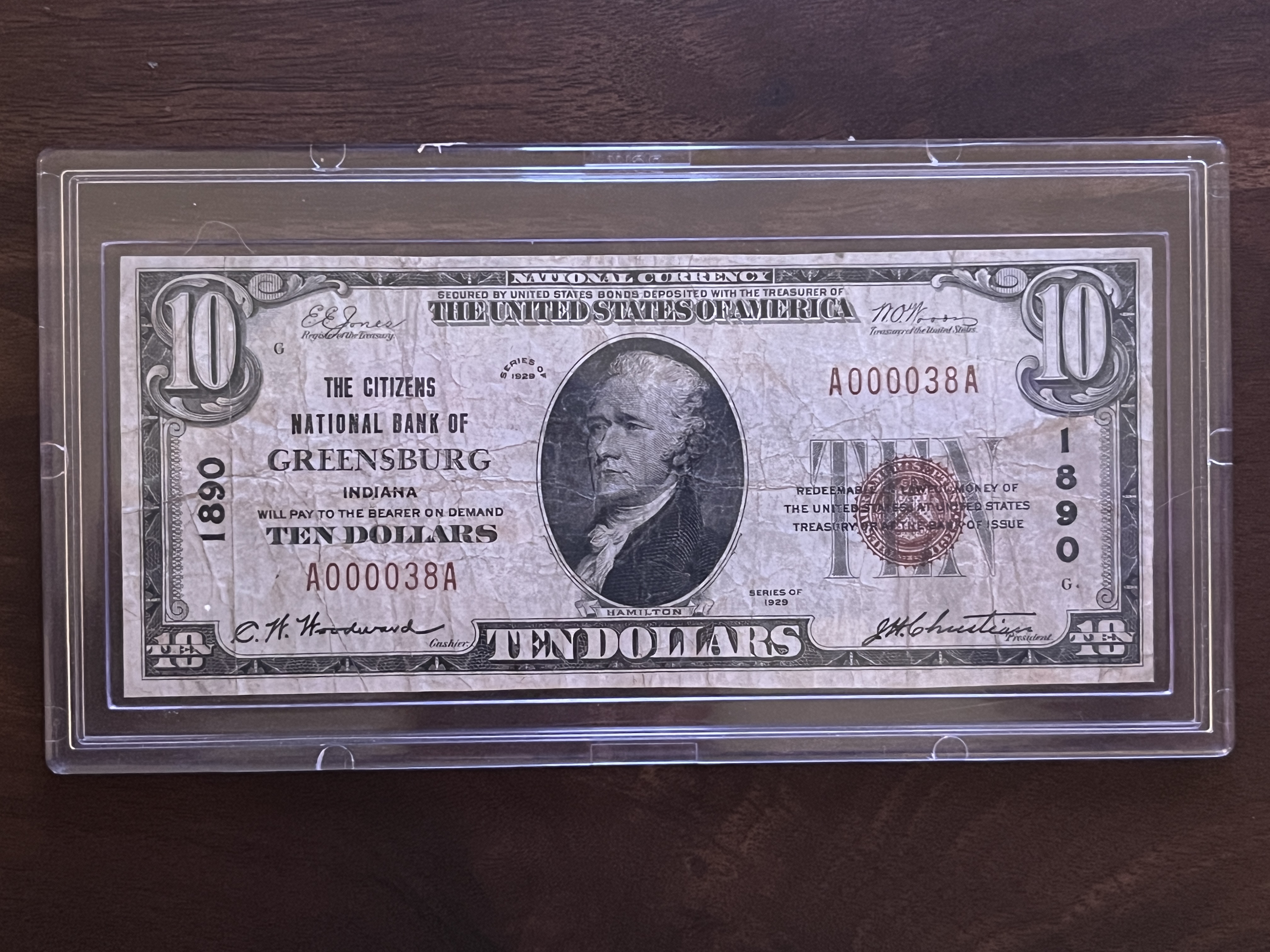
National Note Printed in Greensburg, Indiana
This is called a "National Note". As late as the early 1900's, banks printed their own banknotes as an extension of the mint. This particular one is from my hometown, Greensburg, Indiana. The smaller the city, the more rare the notes (generally) are, so I was very excited to find this by chance at a coin show in Indianapolis. According to the dealer, there are six of this type known. The serial number is extremely low, a trait that is generally sought after among collectors.