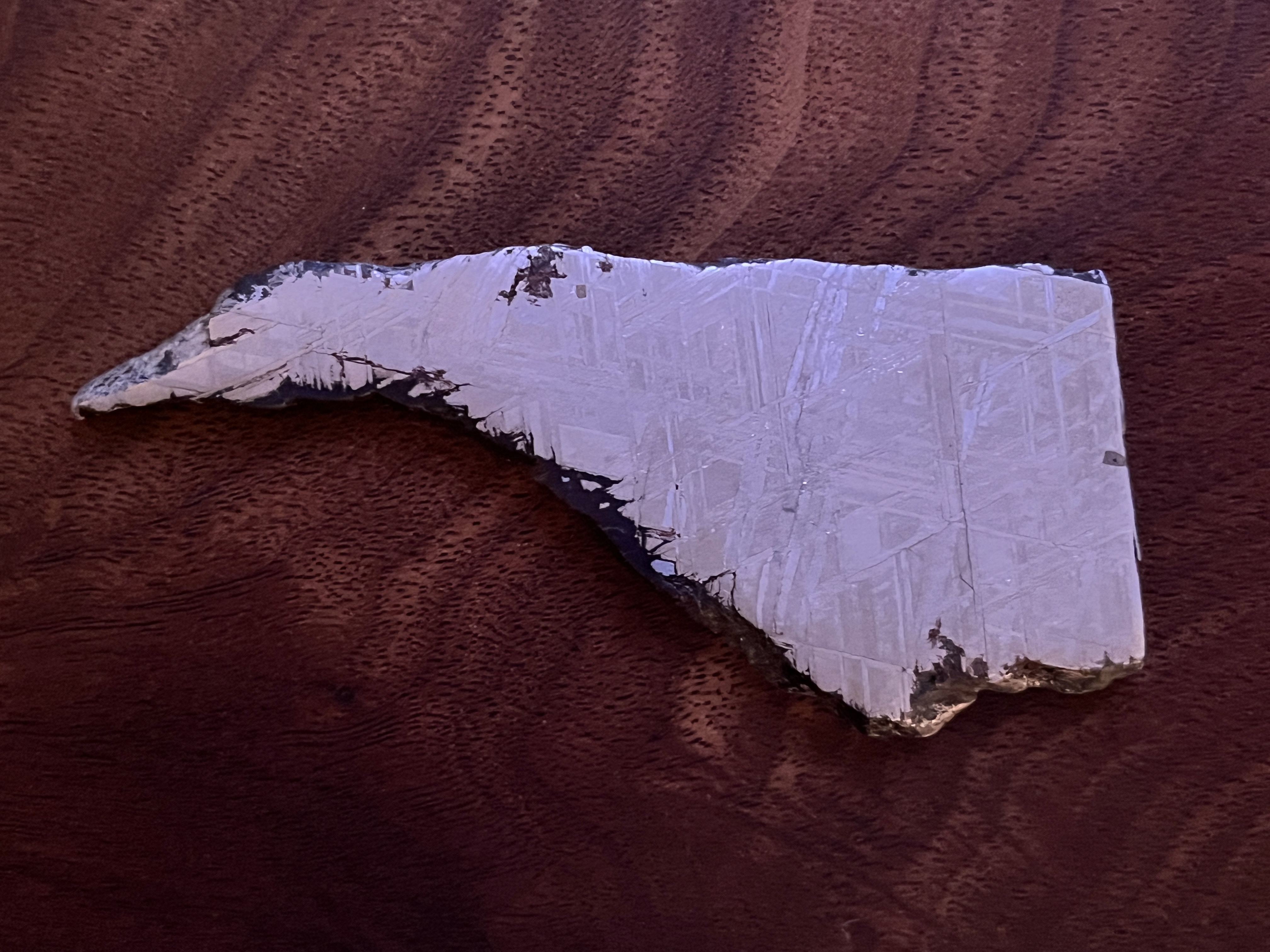
Muonionalusta Meteorite Slice
A slice from my personal collection. The Muonionalusta is a fine octahedrite meteorite that impacted northern Scandinavia roughly one million years ago. It is famous for its distinct Widmanstätten pattern - a crystalline structure of iron-nickel alloys that only forms during extremely slow cooling in space (a degree every few million years or so). It is probably the oldest known meteorite, older than the formation of Earth.
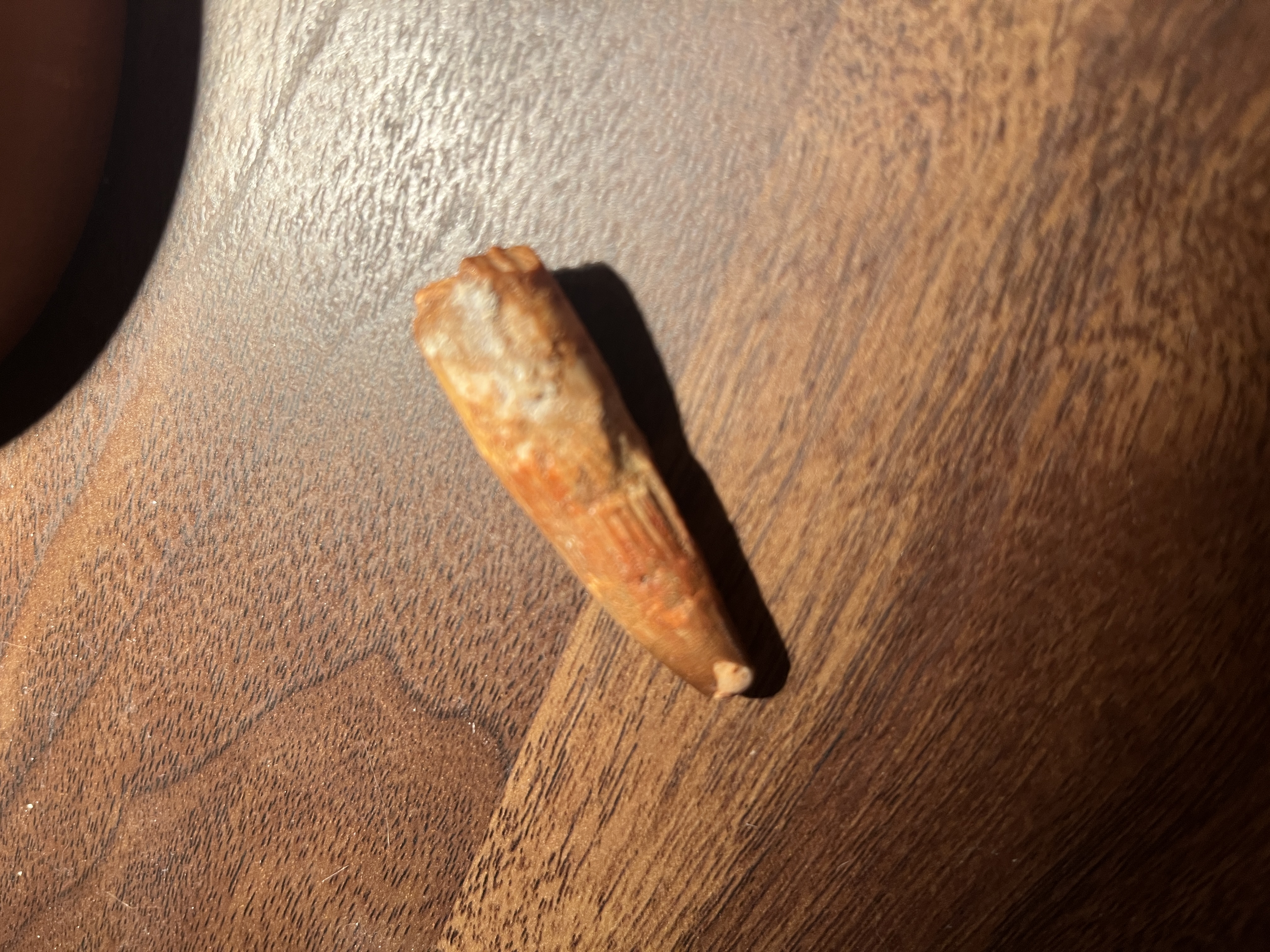
Spinosaurus Tooth
This tooth from my collection belonged to the largest known carnivorous dinosaur. This was found in the Cretaceous-aged Kem Kem Group in Morocco. These pits filled with tar, making the area extremely fossil-rich. Unlike the serrated teeth of a T-Rex, Spinosaurus teeth are conical, designed for gripping slippery aquatic prey.
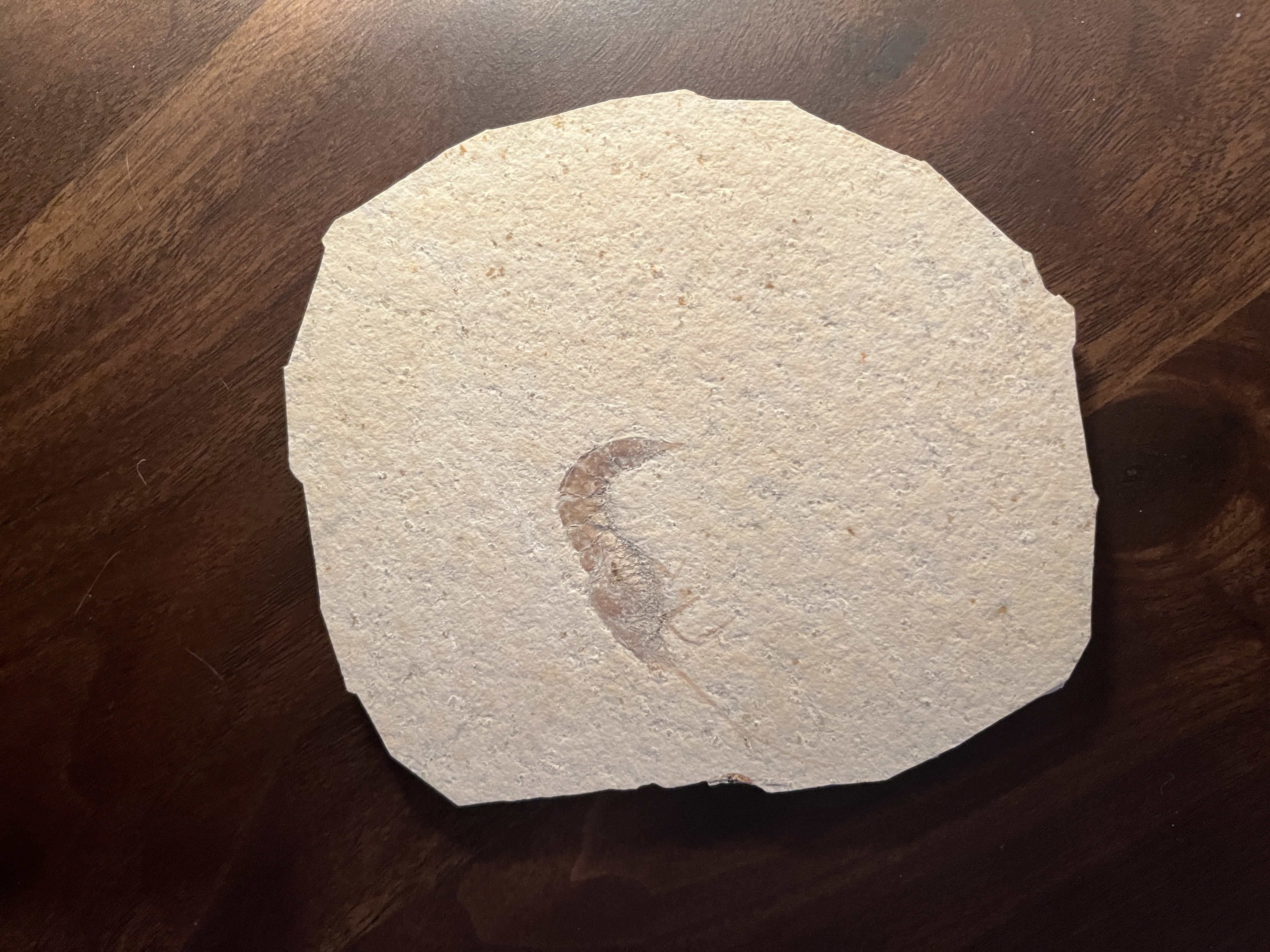
Jurassic Shrimp Fossil
A well-preserved shrimp fossil from my collection. The fine-grained sediment (which would form limestone) allowed for the preservation of delicate structures like the antennae and legs that are usually lost to time.
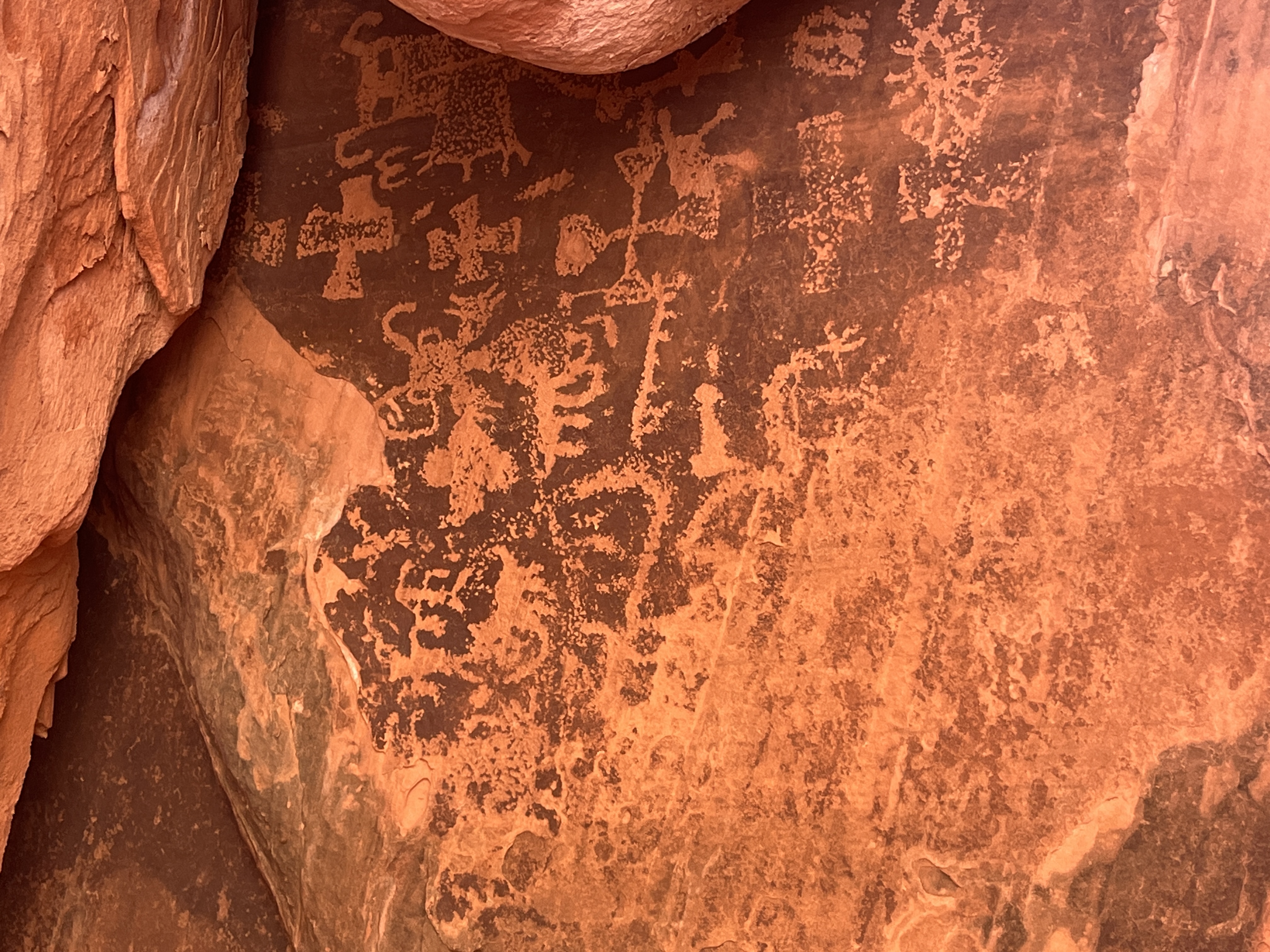
Petroglyphs: Valley of Fire
Ancient rock art (petroglyphs) carved by the Ancestral Puebloans (formerly Anasazi). The archaeologist I met while viewing these informed me that the top-right figure is a "bat-woman" and the circular rings may have been calendars.
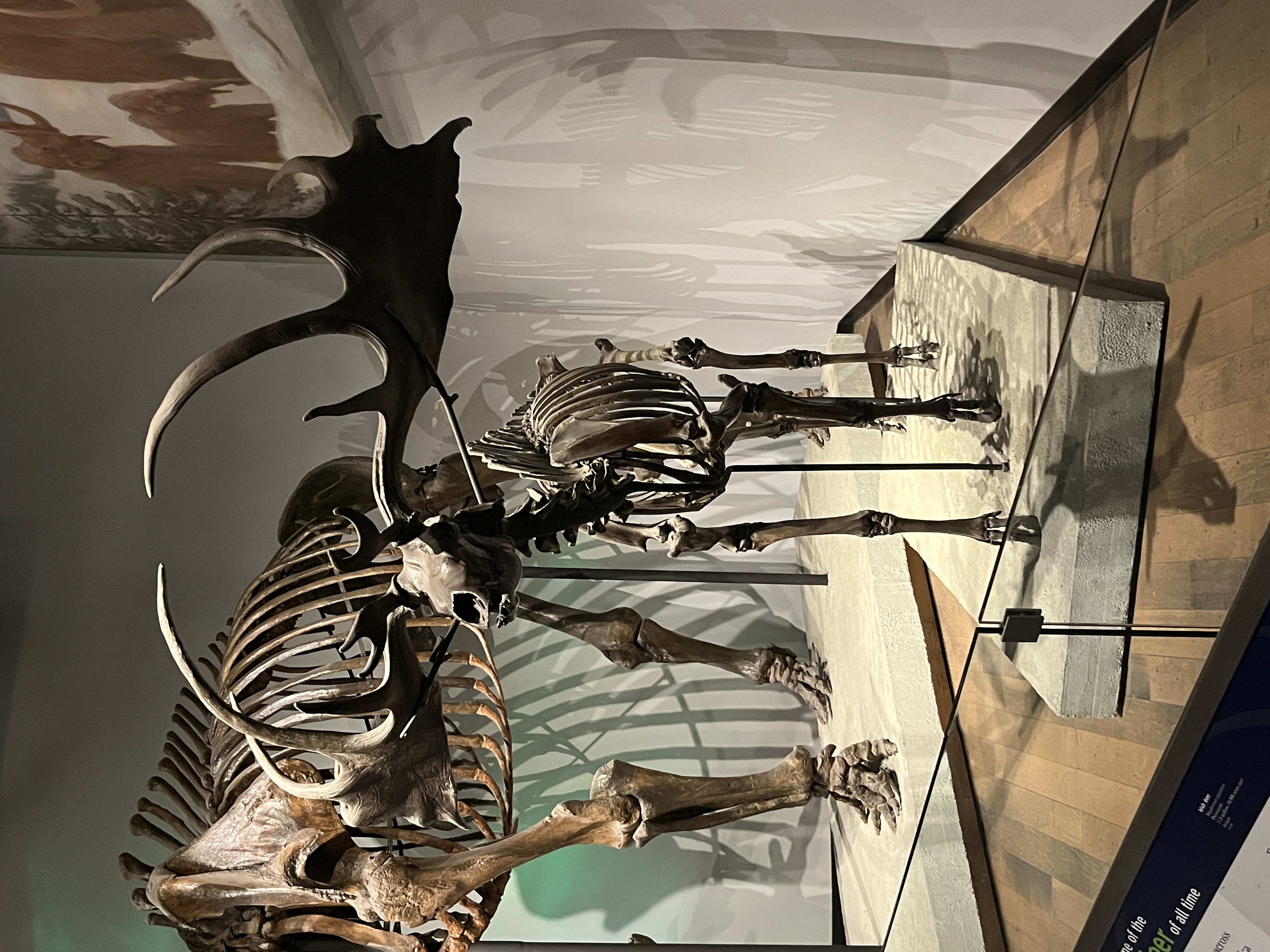
The Irish Elk (Megaloceros giganteus)
Actually a giant deer rather than an elk, these Pleistocene megafauna were famous for having the largest antlers of any known cervid—spreading up to 12 feet. This fossil is a testament to the extreme evolutionary pressures of the last Ice Age. The first time I saw this at the Field Museum in Chicago, I felt a sense of genuine awe. One of my favorites alongside the giant sloth.
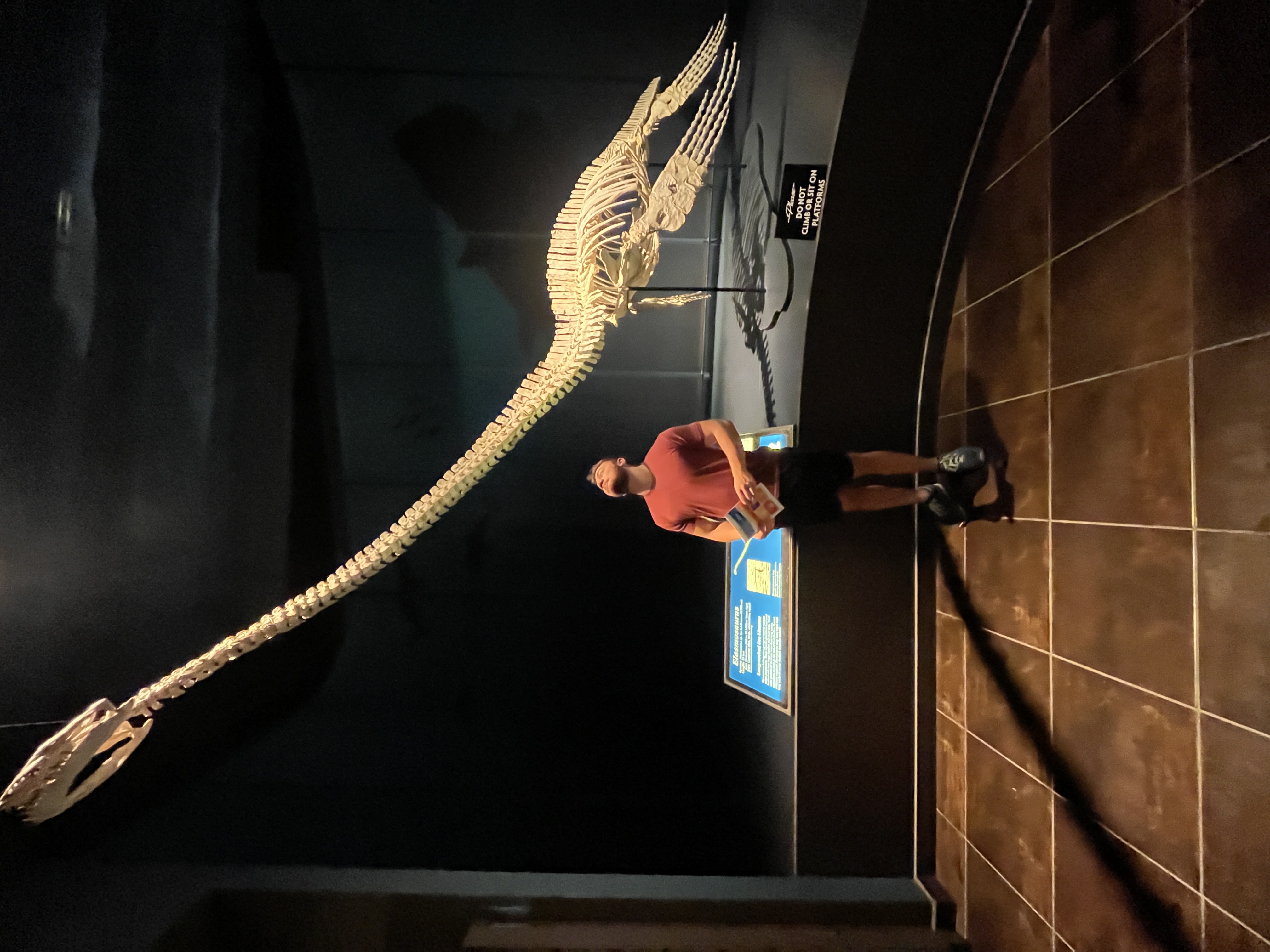
Meeting a Sauropod
Me standing beneath a long-necked Plesiosaur.
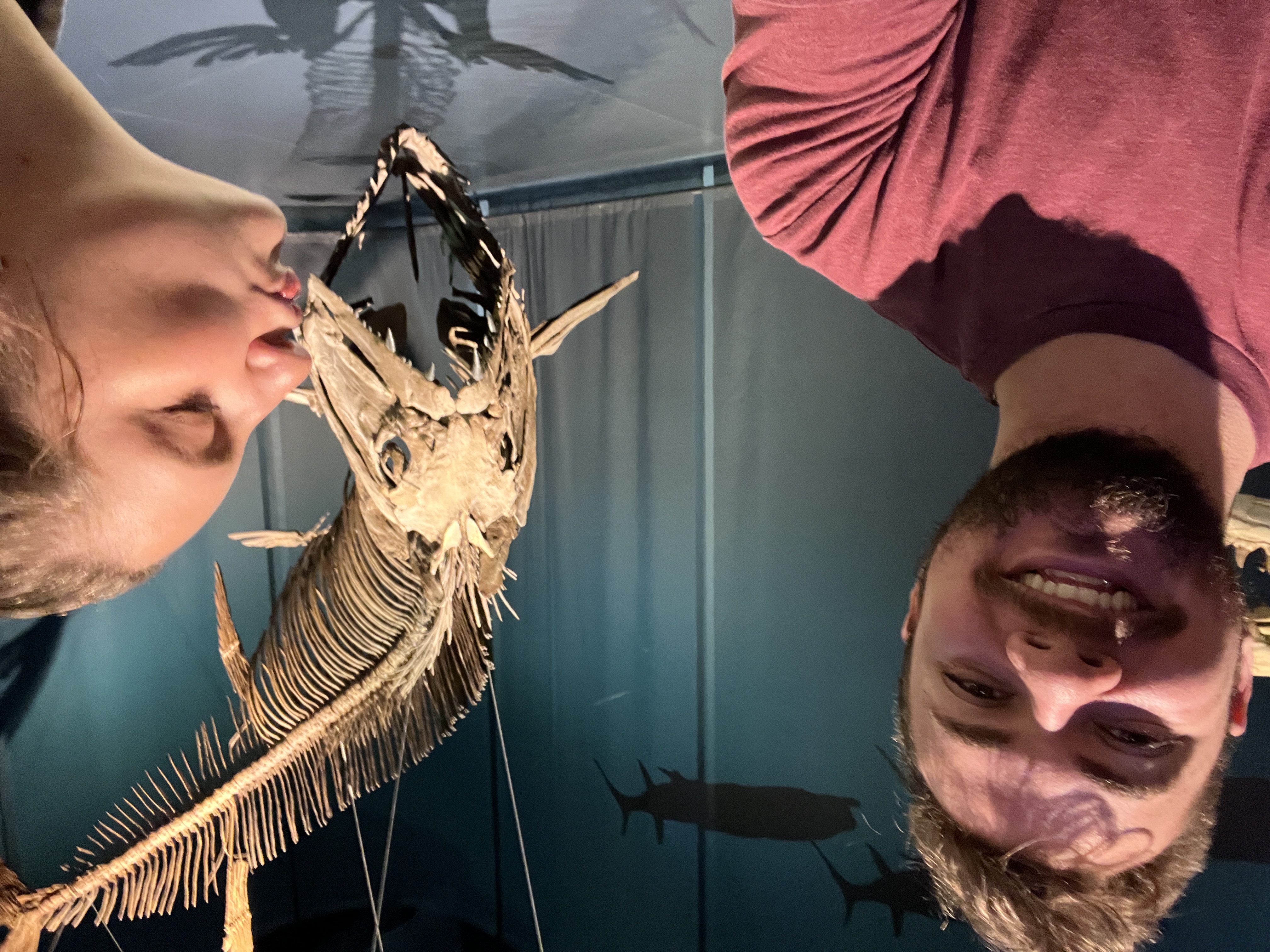
The Eocene Kiss
Kat getting up close and personal with a massive fossilized fish at the Tellus Science Museum in Georgia.
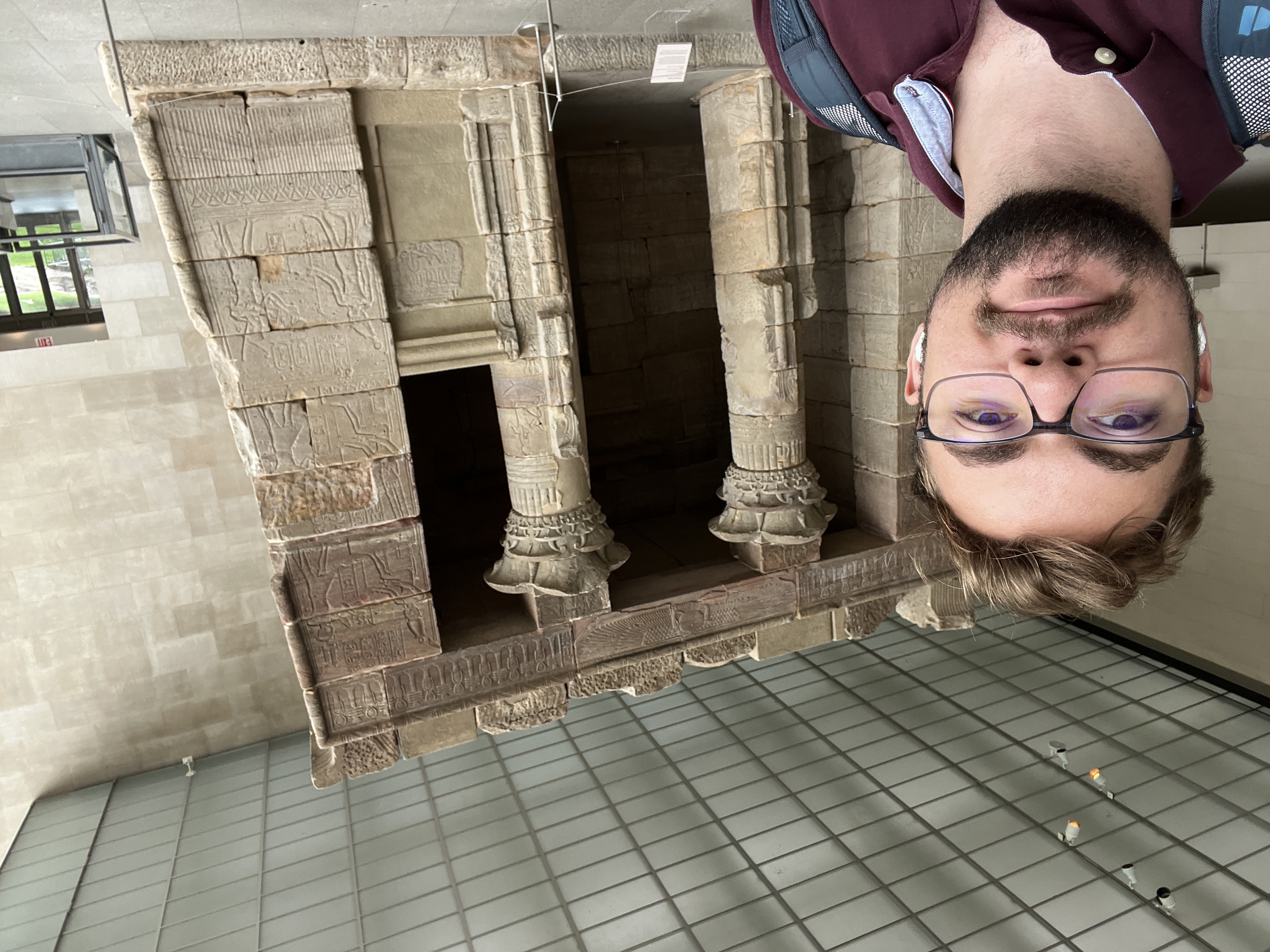
The Temple of Dendur
A Roman-era Egyptian temple completed around 10 BCE. It was gifted to the United States by Egypt in 1965 to save it from flooding during the construction of the Aswan High Dam. It now sits in its own wing at The Metropolitan Museum of Art.
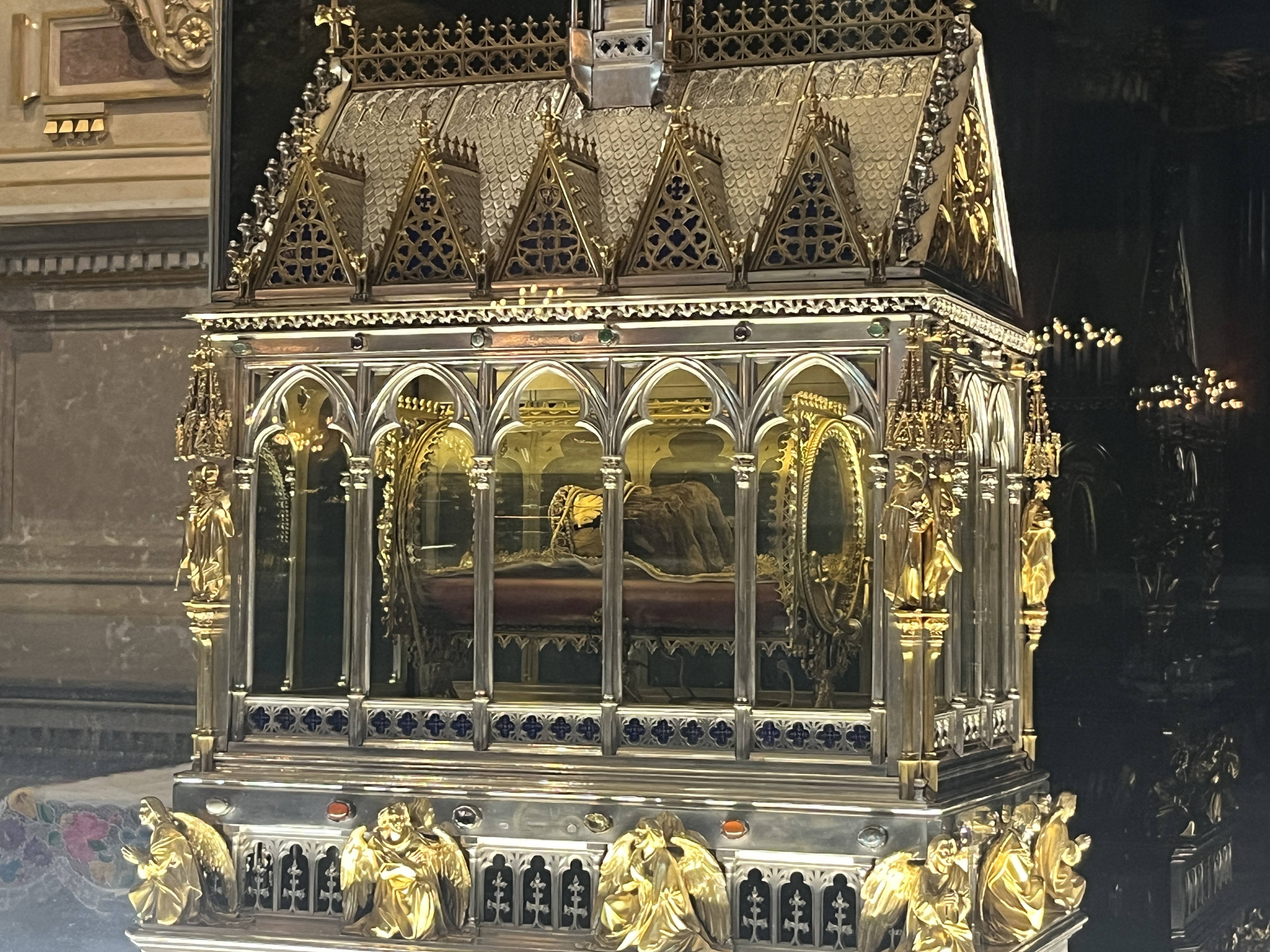
The Holy Right Hand (Budapest)
Look closely to see the mummified right hand of St. Stephen, the first King of Hungary (c. 975–1038). It is housed in St. Stephen's Basilica and serves as one of the most sacred relics in Hungarian history, symbolizing the foundation of the Hungarian state.
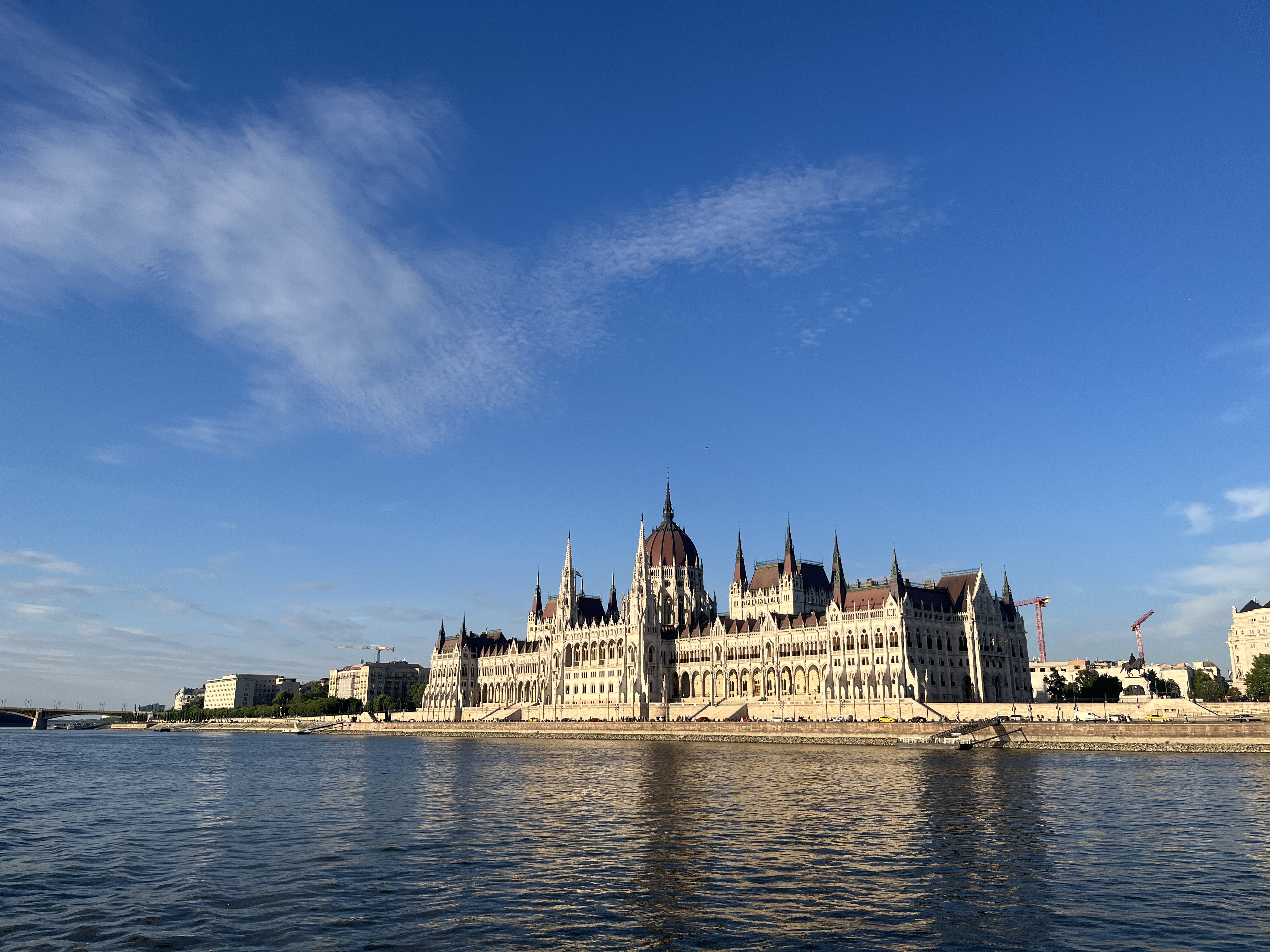
The Danube: Országház
The Hungarian Parliament Building as seen from the Danube.
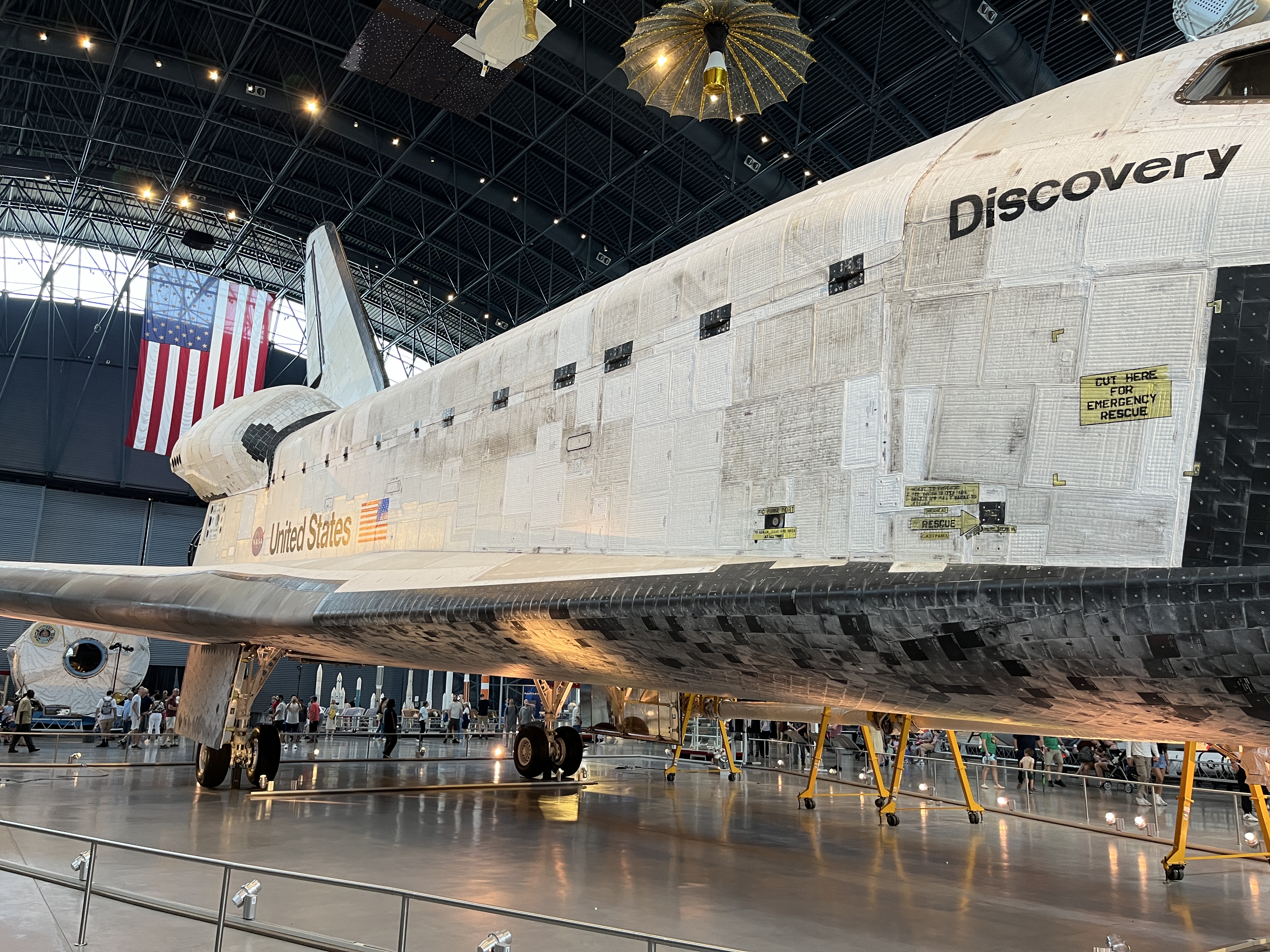
Space Shuttle Discovery (OV-103)
The fleet leader of the Space Shuttle program. Having completed 39 successful missions, Discovery is the most flown spacecraft in history. It now rests at the Udvar-Hazy Center in Virginia, a monument to late-20th-century aerospace engineering.
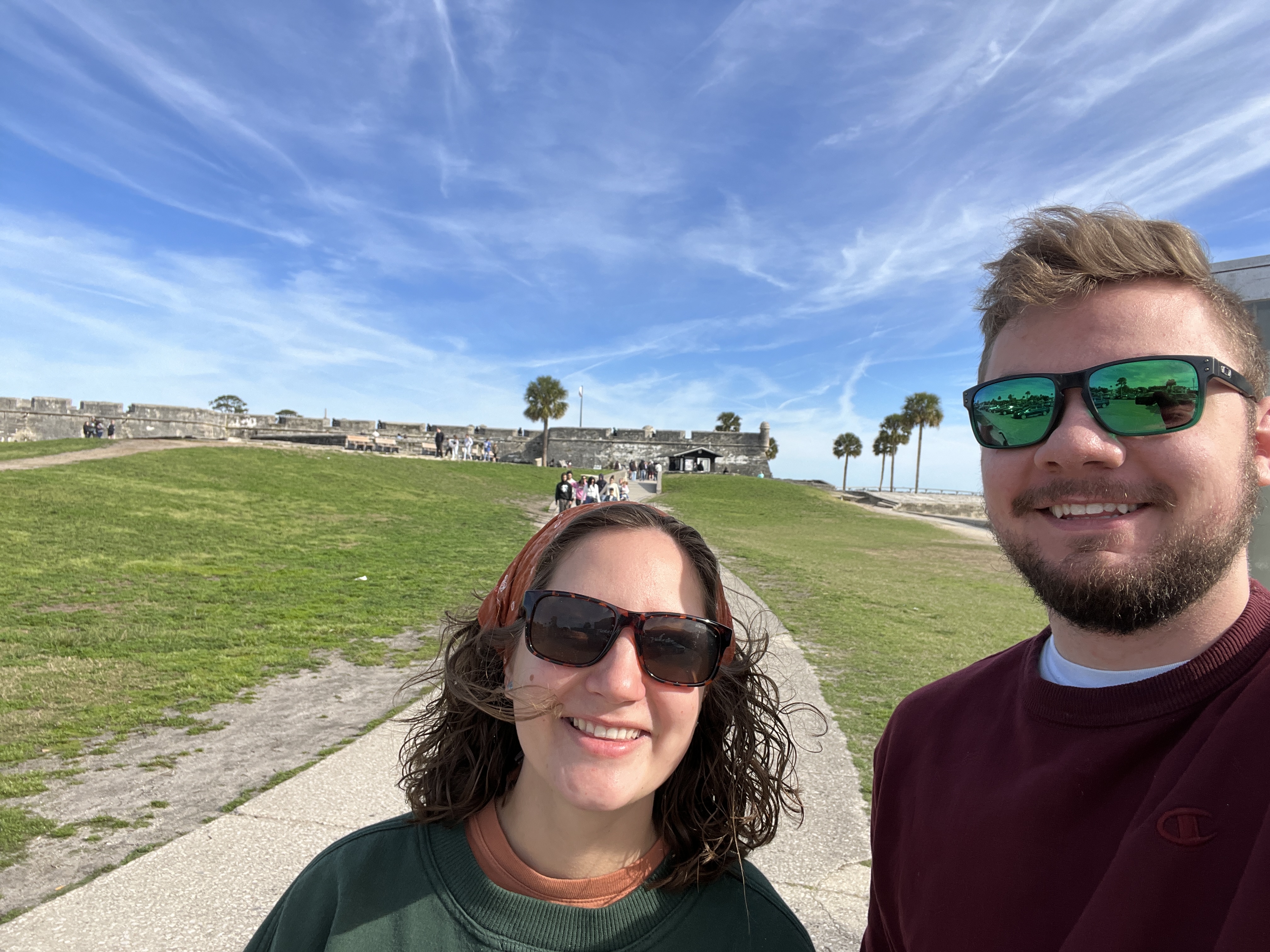
Castillo de San Marcos
Kat and me at the Castillo de San Marcos National Monument in St. Augustine, Florida. Built by the Spanish beginning in 1672, it is the oldest masonry fort in the continental United States.
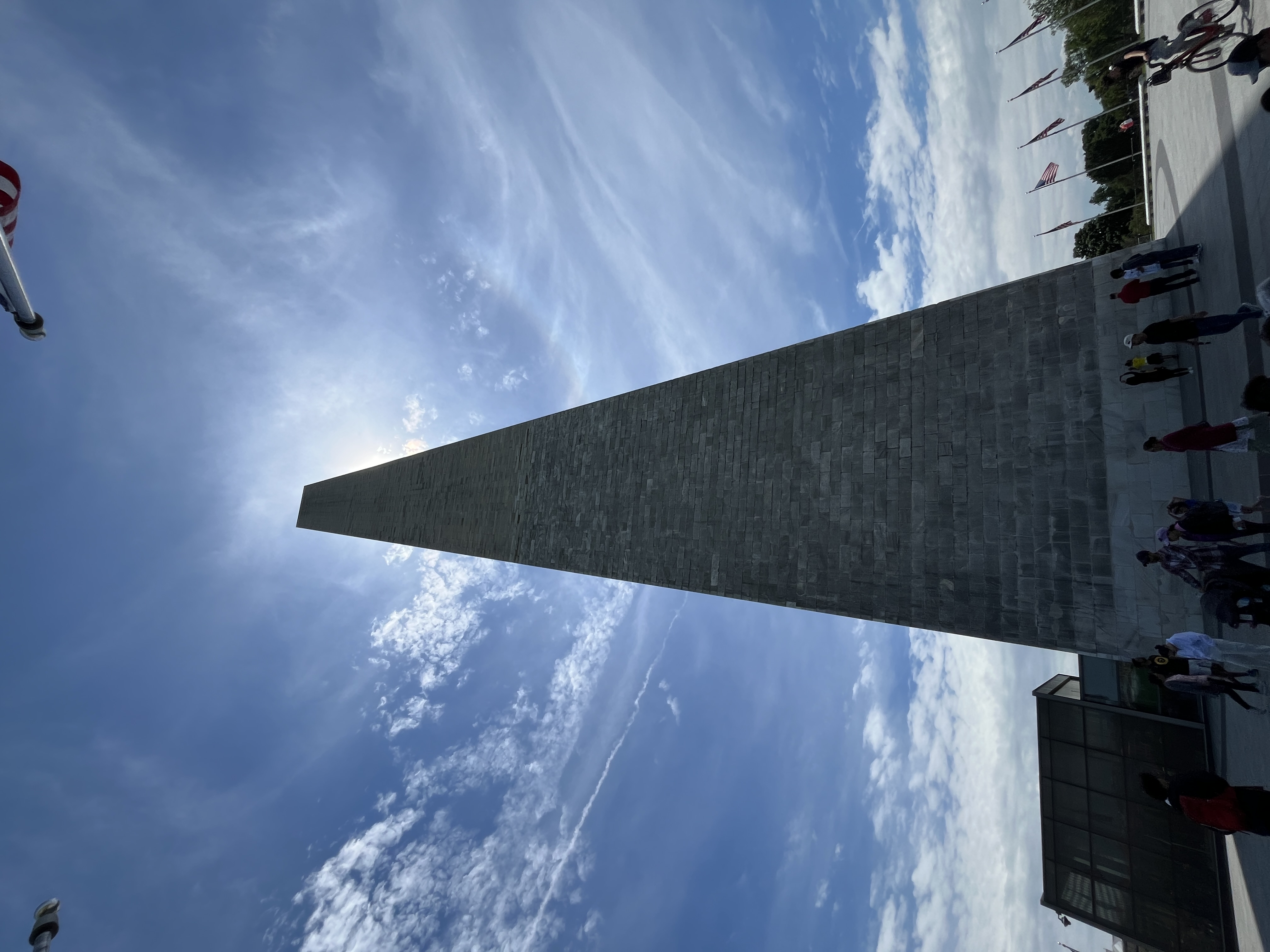
The Washington Monument Color Shift
Looking up from the base of the Washington Monument, the distinct line where the stone changes color is clearly visible. Construction began in 1848 using Texas Blue marble from Maryland, but was halted in 1854 due to lack of funds and the onset of the Civil War.
When construction resumed 22 years later, the original quarry was no longer available. The builders had to use marble from different sources - first from Massachusetts and then back to Maryland. Because the newer stone came from a different geological layer, it weathered differently than the original 152-foot base, leaving a permanent visual record of the Civil War.